
Survey first: $300–$750
A recorded camera run with distances marked. Yours to keep, and usually credited if the work goes ahead.
A cracked or root-damaged drain does not have to mean a trench through the garden. A resin liner is cured inside the existing pipe from an access point you already have, sealing every joint along the run, and the surface above is never touched.
A resin-saturated liner is drawn into the existing pipe through an access point, inflated so it presses against the wall, and cured until it hardens. What you are left with is a continuous pipe inside the old one, with no joints along its length and a slightly smaller bore than the original.
Nothing is excavated, and the cured surface is smoother than the clay or concrete it lines, so flow is typically maintained or improved despite the small loss of diameter. On a property where a driveway, mature garden or paving sits over the line, that is the whole argument.
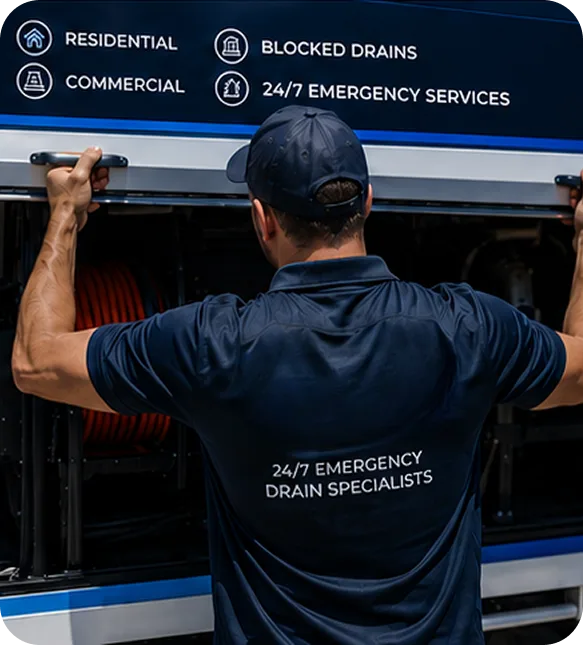

Heavy Hills rain sheets across large lawns and gardens, overwhelming stormwater pits and soak lines that then choke and pool.
Excavating on a slope is a different job from excavating on the flat. Access for a machine is often impossible, the spoil has to go somewhere, trench walls need support, and reinstating a tiered garden or a retaining structure can cost more than the drainage work it was dug for.
Relining sidesteps all of it. The line is repaired from an existing access point, and the surface above stays exactly as it is. On a difficult block the saving is not marginal, it is often the difference between doing the job and deferring it.
An open joint leaks in both directions. On a low-lying block that means stormwater and groundwater entering the sewer through cracks, which is called infiltration, and it quietly overloads a line that would otherwise cope.
It shows up as a system that backs up in wet weather and behaves perfectly in dry. If that is the pattern, sealing the run is the fix, and no amount of clearing will reproduce the result.
Root intrusion is not automatically a relining job. If the roots are fine and the pipe behind them is sound, a cut and jet with a maintenance interval can be the right call for years.
What moves it to relining is structural: an open joint you can see daylight through, a cracked barrel, or a run that has been cleared repeatedly at shortening intervals. Anyone quoting a liner without showing you the inside of the pipe is guessing, and you should ask for the footage.
This is the honest limit of the method. A liner follows the pipe it is cured inside. If the run has sagged into a belly or lost its fall, relining seals it and leaves the shape exactly as it was, so the water still pools where it pooled before.
Glenhaven sits on the leafy northern edge of Sydney’s Hills District (postcode 2156), a semi-rural suburb of large blocks and established homes bordering Castle Hill, Dural, Kellyville and Round Corner. From generous family properties to acreage on the rural fringe, its long drain runs and mature gardens throw up their own challenges, and we know the local ground well.
On sloping ground that failure mode is common enough to check for specifically. Where the profile is wrong, the correct answer is excavation and re-lay of that section, and we will tell you so even though it is the more expensive quote.
Whether a drainage failure is covered varies by policy and by cause, and gradual deterioration is commonly excluded while sudden damage often is not. That distinction is decided on evidence.
Dated camera footage showing the defect, its position and its cause is what an insurer or a strata manager works from. It costs nothing extra to keep and it is impossible to reconstruct later.
A short patch, sometimes called a junction repair, seals one defect and is the proportionate answer when the rest of the run is sound and the ground is stable.
A full-length liner is right when the camera shows the same failure repeating along the run, which on an old clay line it usually does. Paying for a patch on a line with twenty tired joints is how people end up paying twice.
It is not a universal fix and anyone presenting it as one is selling rather than advising. A liner follows the shape of the host pipe, so it cannot correct a run that has lost its fall or sagged into a belly. A collapsed section has nothing to line against. A pipe crushed badly out of round has to be replaced.
In those cases the right answer is excavation, and we would rather quote that and be trusted than reline something that will disappoint you in two years.
A recorded camera run with distances marked. Yours to keep, and usually credited if the work goes ahead.
The prevailing 2026 Sydney range for residential sewer relining.
Proportionate for one fault in a sound run. We will recommend it over a full liner when that is what the camera shows.
For a run failing along its length, which on old clay is the common finding.
Plus reinstatement. On a bare lawn it can win. Under anything you would miss, it usually does not.
These are market ranges, not our price. Nothing is quoted before the survey, and nothing starts before you agree it. Figures here are indicative of the 2026 Sydney market rather than a quote from us, you get your own number as a fixed price before any work starts.

Nothing is priced until a camera has been down the line. The survey is recorded, distances are marked from a known point, and the footage is yours.
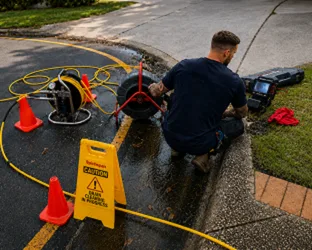
A single defect in a sound run wants a patch. A run failing along its length wants a full liner. A collapsed or sagging section wants excavation. The camera decides, not the quote.
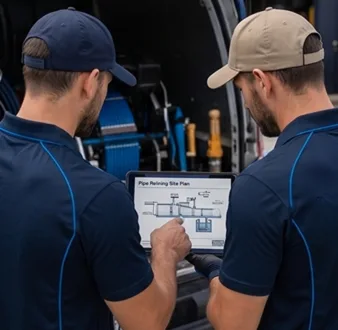
Jet clean, install through the existing opening, cure in place. Water is off for part of the day and nothing above the pipe is disturbed.

Junctions reinstated, final camera run, and the compliance paperwork where the work is notifiable. You keep both recordings.
Send it through and we will come back with what it is likely to be, what the survey costs, and whether relining is even the right conversation.
Cost, lifespan, method, and the cases where a liner is the wrong answer.

Ring us or leave your details. You will get a time for the inspection, not a price invented over the phone.

Leave your details and our local Glenhaven team will call you back fast.