
Simple clear, $150–$300
Pan or S-bend blockage, business hours, one visit. The majority of single-toilet call-outs finish here.
A toilet that will not flush is not a wait-and-see problem, especially in a one-bathroom home. We clear it same-day, find out why it happened, and fix running, leaking and constantly-blocking toilets properly across Glenhaven.
Kind one is an event: something went down that should not have, wipes that lied on the packet, cotton pads, a small toy on a big adventure. The right tool clears it in one visit and the story ends. What turns kind one into a disaster is escalation: hammering the plunger at something compacted, or pouring caustic chemicals that sit in the S-bend waiting to splash the next person who tries.
Kind two is a pattern, the toilet that goes down every few weeks. That toilet is innocent. The sewer under it is not: tree roots through old clay joints, a bellied run holding waste, scale closing the bore, all endemic under Glenhaven’s older streets. Patterns get the CCTV camera, because paying once to fix a drain beats paying monthly to clear a toilet, and the footage means you never take our word for anything.

Generous Glenhaven blocks mean drains travel a long way to the main, so a single dip or root break far from the house can back the whole line up.
On acreage the line from the house to the connection or treatment system can run for sixty metres or more, all of it your responsibility, crossing ground that vehicles drive over and trees grow beside.
It also means the blockage is often nowhere near the house. Locating it precisely before digging is the difference between one neat excavation and several exploratory ones.
Glenhaven’s mature trees and established gardens send roots probing into pipe joints along long runs, a leading cause of recurring blockages here.
The tree is rarely the villain, and removing it is rarely the answer, a mature tree is worth more to the property than the drain repair costs, and the roots already in the line do not vanish when the trunk goes.
What helps: knowing where your line runs so future planting goes elsewhere, and sealing the joints that are already open. If the tree is on council land or a neighbour's property, the repair is still yours, but the camera footage is what any conversation with them needs to start from.
On a property with an on-site system, a toilet that drains slowly across the whole house is often not a blockage at all, it is the tank or the disposal field backing up into the line.
Properties toward Dural and the acreage edge can run septic or on-site drainage that clogs and needs the right gear to clear and inspect.
The tells are wet ground over the trench in dry weather and smell outside rather than in. If that is what you have, stop adding water to the system and call. Continuing to load a failed field turns a pump-out into an excavation.
For blockages caused by what goes down, the fix is behavioural and it works: paper only, a bin in the bathroom for everything else, and a conversation with anyone in the house who has been optimistic about what a toilet can handle.
For blockages caused by the line itself, nothing you do at the pan will help. If yours has blocked more than twice in two years, the money is better spent finding out why than on a third clear.
Relining cures a resin sleeve inside the existing pipe, sealing joints and cracks across the whole run without digging up the yard. On a line whose barrel is sound but whose joints keep admitting roots, it ends the problem rather than deferring it.
It is the wrong answer for a collapsed section, a severe sag, or a line laid at the wrong fall: those need excavation. Anyone recommending relining without showing you the inside of the pipe first is guessing.
In order of how often we find them: too much paper in one flush, wipes and sanitary products that do not break down, a foreign object in a house with small children, roots through a joint in the line outside, and a structural fault in the pipe itself.
The first three stop at the pan and clear in minutes. The last two are in the drain beyond the house and will keep happening until the line is dealt with, which is why the useful question is not what blocked it but where.
Pan or S-bend blockage, business hours, one visit. The majority of single-toilet call-outs finish here.
When it takes an electric eel or jetter running time rather than hand tools to shift.
The same work at night or on weekends, with after-hours attendance and labour rates applied.
The repeat-blockage answer: camera down the line, cause on screen, quote built on evidence you watch with us.
Valves, washers and seals fix most running or leaking toilets on the spot; a full new suite is one fixed quoted price.
Business-hours versus after-hours is the single biggest cost lever, if it can safely wait for daylight, we will say so on the phone. Figures here are indicative of the 2026 Sydney market rather than a quote from us, you get your own number as a fixed price before any work starts.

Just this toilet, or other drains too? Overflowing or slow? The answers set the urgency and the toolkit, and you get the price picture before we roll.
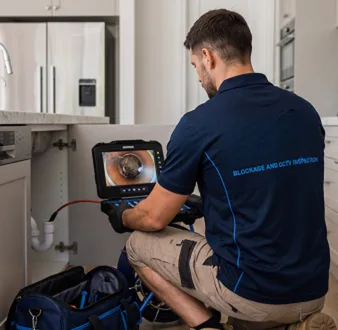
Floor covered before anything starts. Closet auger for the pan; eel or jetter when the blockage lives deeper in the line.
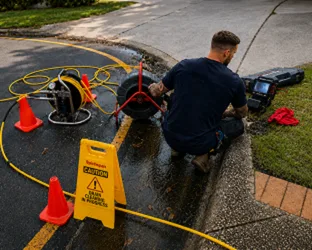
Obvious one-off causes end the job there. A repeat pattern sends the camera down, because recurring blockages are never really about the toilet.

Whatever the lens found, roots, a belly, failing clay, gets a fixed-price fix: jetting, relining or repair. The monthly-blockage cycle ends.
That is not a booking, that is an emergency, and the line treats it like one, 24/7.
Cleared today, the cause named, a fixed price first: and the bathroom cleaner than we found it.

Leave your details and our local Glenhaven team will call you back fast.