
Flexible hose & connector fixes, $100–$200
The brittle connector behind the cooktop, small part, common leak source, quick fix.
Gas is the one trade where "pretty confident" is not a standard. Leaks found and repaired, cooktops and heaters connected, lines run and certified: all of it by licensed gasfitters, all of it pressure-tested before the gas goes back on in Glenhaven.
In NSW, every job on a gas installation: connecting a cooktop, moving a bayonet, repairing a line: must legally be done by a licensed gasfitter, and for good reason: the failure modes are leaks, fires and carbon monoxide, none of which give second chances. It is also why "the handyman hooked it up" appliances are the single most common source of the leaks we get called to.
Licensed does not just mean allowed. It means the job finishes with a manometer pressure test proving the whole installation holds, appliances checked for correct operation and ventilation, and work done to AS/NZS 5601, the standard that decides what your insurer thinks of the installation if anything ever goes wrong. Across Glenhaven and the Hills District, that is the finish line on every gas job we do.


Cylinder and bulk tank installations have clearance requirements from boundaries, openings, ignition sources and vehicle paths, and those are the things most often wrong on a property where a shed or deck has been added since.
Freestanding homes give more room to do the work properly and more ways to get it wrong: appliance clearances, correct sizing for added load, and compliant ventilation all apply.
It is worth a check whenever anything is built near an existing installation. A compliant tank position can become non-compliant because something was built beside it, and that surfaces at sale time if not before.
Gas installations and appliances are governed by AS/NZS 5601:2022, referenced in the Gas and Electricity (Consumer Safety) Regulation 2018 and legally enforced in NSW (NSW Government), covering pipe sizing, ventilation and appliance clearances. It is licence-only work.
On a large property the run from the tank to the house, or out to a shed, a studio or a second dwelling, can be substantial, and pressure drop over distance is real.
An appliance starved at the end of a long undersized line behaves like a faulty appliance. Sizing the run correctly is the fix, and it is far cheaper to establish before the trench is closed than after.
Glenhaven sits on the leafy northern edge of Sydney’s Hills District (postcode 2156), a semi-rural suburb of large blocks and established homes bordering Castle Hill, Dural, Kellyville and Round Corner. From generous family properties to acreage on the rural fringe, its long drain runs and mature gardens throw up their own challenges, and we know the local ground well.
Beyond the reticulated network, gas means bottles or a bulk tank. LPG runs at a different pressure from natural gas, uses different jets and regulators, and appliances are not interchangeable between the two without conversion.
It is the single most common mistake we correct on rural properties: a natural gas appliance bought secondhand and connected to LPG. It will burn, badly and unsafely, and the yellow flame is the giveaway.
Gasfitting is licensed work in NSW and there is no handyman tier of it. It is not bureaucratic caution, unburnt gas and incorrectly burnt gas are both lethal, and the second one is odourless.
It also has consequences beyond safety. Unlicensed gas work voids home insurance, invalidates appliance warranties, and surfaces during a sale. Every job here is done under licence and finishes with a certificate.
The installation is isolated, brought to a set pressure, and watched on a manometer for a defined period. If the needle holds, the system is tight. If it drops, gas is escaping somewhere and the test tells us roughly how much.
It is the only way to know the condition of pipework you cannot see, and it is the step people most often want to skip. It is also the step that finds the uncapped line behind the old stove.
An appliance service is combustion analysis, not a clean. The technician measures what is coming out of the flue, checks the burner and heat exchanger, verifies ventilation and confirms the safety devices work.
Manufacturers generally specify every two years for heaters and annually for anything unflued. Very few households do it, and it is the single most effective thing you can do about a risk you cannot smell.
The brittle connector behind the cooktop, small part, common leak source, quick fix.
Leaks at threads, valves and joints: found, sealed properly, retested under pressure.
Corroded or damaged runs cut out and replaced. Concealed lines needing access run $800–$2,500.
Cooktop, oven or heater connected, tested and certified. More if a new line or bayonet has to be run to reach it.
The going Sydney range for licensed gas work in 2026, with call-out fees typically $80–$150.
No gas job of ours ends without holding pressure on a gauge, that is the receipt that matters. Figures here are indicative of the 2026 Sydney market rather than a quote from us, you get your own number as a fixed price before any work starts.
Suspected leaks start with isolation at the meter and ventilation. Diagnosing a system still feeding its own leak is how amateurs get hurt.
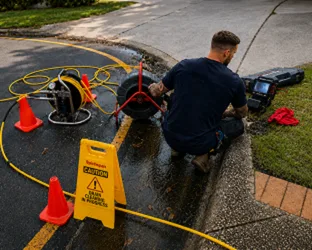
A manometer proves whether the installation loses pressure; detection fluid and instruments then walk it back to the guilty joint or run.
The failed piece is replaced with compliant material to AS/NZS 5601, one connector or a full rerun, never sealant and optimism.
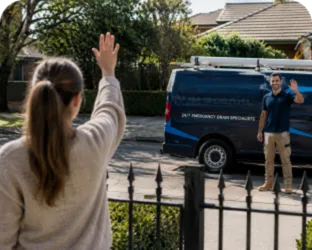
The whole installation holds on the gauge, appliances relight to clean blue flames, ventilation checks out, and the compliance record is yours.
Nor should it, legally. One visit: connected, tested, certified, warranty intact. The proper way is also the cheap way, counted honestly.
Licensed hands, a passing pressure test, and the certificate to prove it. Smelling gas this minute? 131 909 from outside comes before this form.

Leave your details and our local Glenhaven team will call you back fast.